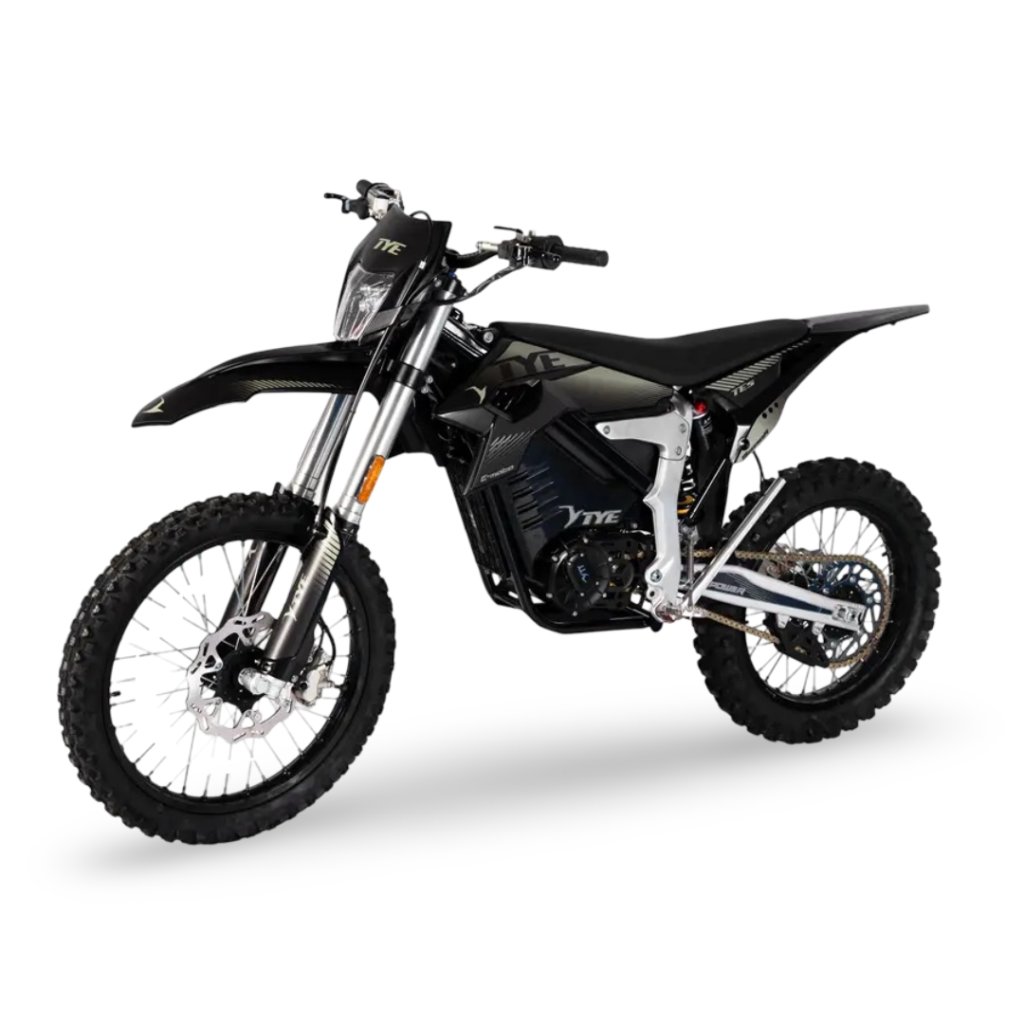

For decades, the world of motocross, enduro, and trail riding has been defined by one unmistakable sound: the raw, barking scream of a high-revving gasoline engine. The smell of premix, the ritual of maintenance, and the visceral mechanical thrill are baked into dirt bike culture. But a quiet revolution is rolling into the pits. Electric cross moto dirt bikes, once dismissed as overgrown toys, are now demanding serious attention. The question on every rider’s mind is no longer if they work, but a much more provocative one: Could they actually be better than gas?
We strapped on our boots, threw a leg over both machines, and headed to the track and trails to find out. This isn’t just a spec sheet comparison; it’s a real-world ride-off between the old guard and the new wave.
The Contenders: Understanding the Machines
First, let’s set the stage. On one side, you have the legendary gas-powered cross/motocross bike. Think Yamaha YZ450F, KTM 350 SX-F, or Honda CRF250R. These are precision instruments of combustion—lightweight, powerful, and honed over 50 years of competition. They’re peaky, demanding, and incredibly rewarding to ride fast.
On the other side, the electric challengers. Brands like Sur-Ron Light Bee X, KTM Freeride E-XC, Talaria Sting, and the premium Stark VARG are leading the charge. They replace the engine, clutch, and gearbox with a battery pack, a controller, and a compact but mighty electric motor.
The fundamental difference? A gas engine must build power—it needs RPMs. An electric motor delivers its maximum shove instantly, from zero RPM. This one fact changes everything.
Round 1: Instant Torque & Power Delivery
Winner: Electric
This is the electric dirt bike’s knockout punch. Twist the throttle on a high-performance e-moto, and the response is instantaneous and linear. There is no lag, no clutch feathering to find the powerband, no panic-revving before a jump face. The power is just there—a smooth, massive wave of torque that launches you out of corners and up steep climbs with surreal effortlessness.
For technical trail riding and hill climbs, this is a game-changer. Traction control becomes intuitive; you can modulate the exact amount of power to the rear wheel with micrometer precision using just your right wrist. On a gas bike, mastering the clutch-throttle coordination is an art form. The electric bike simplifies this, allowing you to focus entirely on your line and balance.
On the motocross track, the benefit is more nuanced. The instant hit can be overwhelming on slick, hard-packed corners. However, the latest generation of e-bikes (like the Stark VARG) feature tunable power curves via smartphone apps. Want a smooth, tractable map for tight woods? Done. Want an aggressive, YZ450F-beating hit for a supercross rhythm section? A few taps and it’s yours. This tunability is something a gas bike can only achieve with significant mechanical tinkering.
Round 2: Handling & Weight Distribution
Winner: It’s Complicated (But Electric Has a Key Advantage)
Gas bikes have a rotating mass—the crankshaft, piston, clutch—high in the frame. Electric bikes pack their weight (the battery) low and central, between your feet. This creates a profoundly low center of gravity.
On the trail, this makes e-bikes feel incredibly planted and nimble. They change direction with less effort, feel more stable on off-cambers, and are less tiring to wrestle through a full day of riding. The feeling is like riding inside the bike, rather than on top of it.
The catch? Overall weight. While the gap is closing fast, a typical performance e-moto still weighs 20-40 lbs more than its comparable 250cc gas counterpart. You feel this when manhandling the bike on the stand or picking it up after a crash. In the air, however, the centralized mass makes the bike feel predictable and easy to position.
For motocross, where flickability and “flick-and-float” are key, some pro riders still prefer the hyper-light feel of a gas bike. But for almost every other discipline, especially enduro and technical cross-country, the low-COG advantage of electric is a huge win.
Round 3: The Sound of Silence
Winner: Electric (For Access and Stealth)
This is a double-edged sword. The silence is, frankly, bizarre at first. You hear the whir of the motor, the crunch of tires, the rattle of chain on sprocket—sounds normally drowned out by the engine. This sensory shift takes getting used to, but it unlocks superpowers.
- Access: Trails are closing due to noise complaints. An electric bike is a good neighbor. You can ride in areas previously off-limits, often earlier or later, without disturbing anyone.
- Communication: You can actually talk to your riding buddy without yelling. Hear a strange mechanical noise? You’ll hear it immediately.
- Focus: The silence removes a layer of sensory overload, allowing for heightened concentration on the trail ahead.
- The Downside: Sound is a critical safety cue for other riders. On a busy track or multi-use trail, you are invisible audibly. Aggressive use of a bell or horn becomes essential. And for many, the scream of the engine is an irreplaceable part of the emotional thrill.
Round 4: Maintenance & Operating Cost
Winner: Electric (By a Landslide)
This isn’t even a contest. A gas dirt bike is a symphony of moving parts that require constant love: oil changes, air filter cleaning, valve adjustments, coolant, transmission fluid, spark plugs, clutch replacements, and top-end rebuilds. It’s a labor of love and a significant cost.
An electric cross moto dirt bike has perhaps a dozen moving parts. There’s no engine oil, no filters, no valves, no clutch. Maintenance boils down to: chain lube, tire pressure, brake pads, and suspension servicing. The drivetrain is essentially bulletproof.
The cost to “fuel” it is a fraction of gasoline. A full charge for 40-80 miles of trail riding might cost less than a dollar in electricity. The battery is the big-ticket item, with a lifespan of hundreds to thousands of cycles before significant degradation. While a replacement is costly, you’re offsetting years of gas, oil, and engine parts.
Round 5: Range & “Refueling” Anxiety
Winner: Gas (For Now)
This remains the electric bike’s greatest limitation. A gas bike can go 60-100 miles on a tank, and you can carry a bottle of fuel to extend that indefinitely. Refueling takes two minutes.
An electric bike’s range is highly variable. Aggressive motocross use might drain a battery in 1-2 hours. Moderate trail riding can extend that to 40-60 miles. But when it’s empty, you’re done. Recharge times range from 1.5 hours on a fast charger to 6-8 hours on a standard outlet. For a full day of hard riding, or multi-day backcountry adventures, the gas bike is still the only practical tool for the job.
That said, for 90% of riders—those who hit local tracks for practice sessions or ride 20-30 mile trail loops—the range of modern e-bikes is perfectly adequate. You charge overnight, just like your phone. The paradigm shifts from “going until the tank is empty” to “starting every ride with a full charge.”
The Verdict: So, Do They Outperform?
For sheer, accessible performance: Yes, electric cross moto dirt bikes can outperform gas bikes in many critical areas.
If we define performance as instant torque, tractability, low-speed control, handling agility from low COG, and minimal maintenance, then the electric bike is not just competitive—it’s superior. It makes extreme power more usable for more riders. It lowers the skill barrier for technical riding while raising the ceiling for precision. It’s a cheaper, cleaner, and quieter machine to own and operate.
Where gas still reigns supreme: In the realms of long-distance endurance, the visceral emotion of sound and vibration, the established ecosystem of parts and knowledge, and the pure, lightweight flickability demanded at the absolute pinnacle of motocross racing. The ritual and culture of gas bikes also hold immense value.
We Found Out: It’s an Evolution, Not Just a Replacement
The takeaway isn’t that electric will erase gas. Instead, electric cross moto dirt bikes are creating a new, parallel segment of riding. They are the ultimate practice tool, the stealthy trail explorer, the low-maintenance weekend warrior’s dream, and an astonishingly good gateway into the sport for new riders.
For the average enthusiast, an electric bike doesn’t just match the gas experience—it redefines it. The silence lets you connect with the trail in a new way. The instant power makes you feel like a hero. The simplicity brings the fun back without the fuss.
So, could they outperform? On many trails, on many tracks, for many riders—absolutely. The future of dirt riding isn’t silent, but it’s certainly humming with a thrilling new kind of power. The best way to know? Throw a leg over one. Your first silent launch up a hill will tell you everything. The revolution isn’t coming; it’s already here, and it’s waiting at the gate.
if you liked the article, please follow us:
Related searches for electric dirt bike


