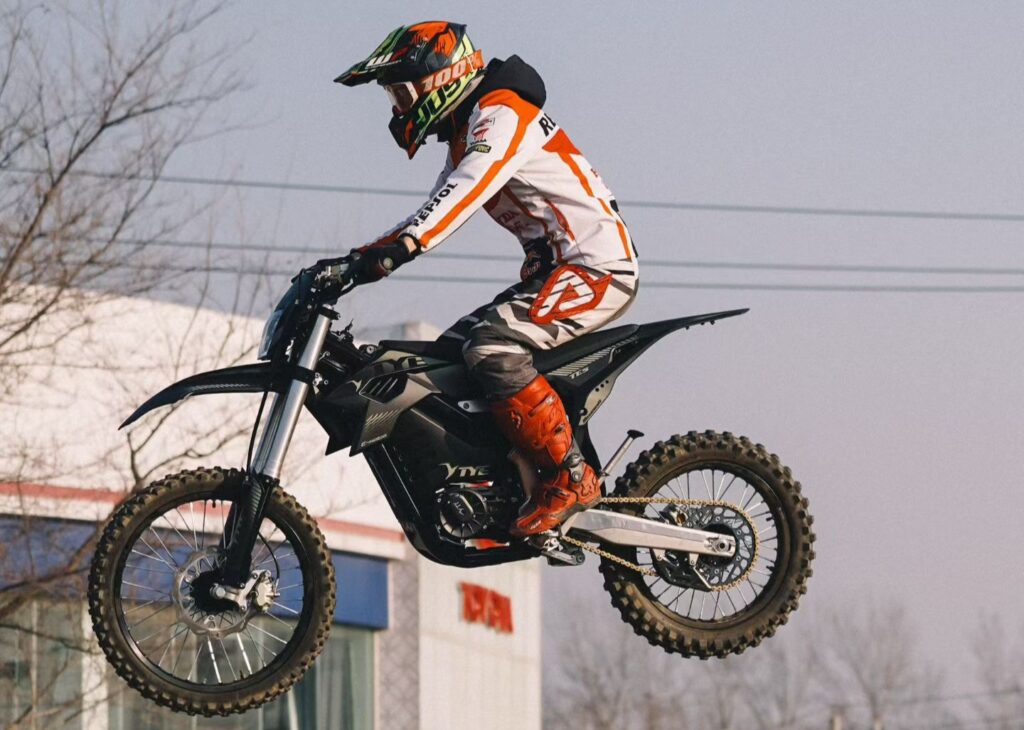

The French personal mobility landscape is undergoing a profound transformation, driven by environmental imperatives, technological advancements, and evolving lifestyles that prioritize outdoor recreation and sustainable solutions. Within this dynamic, the electric motorcycle segment is gaining significant momentum. A particularly niche yet rapidly evolving subset is the market for off-road electric motorbikes for adults. This category, existing at the intersection of motorized sports, green technology, and leisure, presents a fascinating case study in modern consumer trends and regulatory challenges. This analysis provides a comprehensive overview of the current state of the French electric motorcycle market, details the distinct advantages and product characteristics of adult off-road electric motorbikes, explores emerging trends, and forecasts future development within the framework of French and European policy.
1. Current State of the Electric Motorcycle Market in France
The French market for electric two-wheelers is vibrant and growing steadily, albeit from a smaller base compared to electric bicycles or urban scooters.
1.1 Overall Market Growth & Drivers
According to data from the Comité des Constructeurs Français d’Automobiles (CCFA) and the Association des Importateurs de Motocycles (AIM), registrations for electric motorcycles and scooters have seen consistent double-digit growth in recent years. This surge is fuelled by several key factors:
- Urban Regulation: The implementation of Zones à Faibles Émissions (Low-Emission Zones or ZFEs) in major metropolitan areas like Paris, Lyon, and Grenoble restricts the circulation of highly polluting vehicles, making electric powertrains an attractive, future-proof choice for urban commuters (primarily scooters and roadsters).
- Environmental Awareness: A growing segment of consumers is highly sensitive to the ecological impact of their transport and leisure activities, seeking cleaner alternatives.
- Technological Progress: The historical Achilles’ heel of electric vehicles—range anxiety—is gradually being mitigated by improved battery energy density. Charging times are also decreasing.
- Cost of Ownership: The cost per kilometre for electricity remains substantially lower than for petrol. Furthermore, the reduced mechanical complexity of electric drivetrains translates to lower long-term maintenance costs.
1.2 The Off-Road Electric Niche
The sub-segment of adult off-road electric motorbikes is in its early stages but is structuring rapidly. It caters to a specific and discerning clientele:
- Recreational Riders: Enthusiasts of trail riding, enduro, and motocross seeking a new, quieter, and often more accessible riding experience in natural settings.
- Landowners & Professionals: Farmers, foresters, and estate managers for whom the absence of noise and exhaust emissions is a major advantage for working in sensitive environments and around livestock.
- Athletes & Early Adopters: Drawn to the instant torque delivery and precise, linear power control offered by electric motors, which provides a novel technical challenge and sensation.
- Leisure Centres & Rental Operators: For guided tours and recreational activities where minimizing noise pollution is key to accessing nature reserves or operating near residential areas without disturbance.
1.3 Key Market Players
The market is populated by a diverse mix of innovators and established brands:
- Electric Specialists: Pioneering brands like Zero Motorcycles (USA) and Energica (Italy, though more road-focused) have set early benchmarks. Sur-Ron has democratized access with its lightweight, agile, and relatively affordable “Light Bee” models, creating a new entry-level category.
- Traditional Powersports Giants: Austrian leader KTM has been at the forefront with its Freeride E series. Sister brands Husqvarna and GasGas are actively developing their electric portfolios. Japanese majors like Honda and Yamaha regularly showcase advanced off-road electric concepts, indicating serious R&D investment.
- Innovative Start-ups: European agility is on display with companies like CAKE (Sweden) and its highly designed Kalk series, and UVAR (Unlimited Vintage And Race) in France, which focuses on performance and bespoke aesthetics.
- Crossover from ATV/SSV: Manufacturers like Polaris with its Ranger EV side-by-side demonstrate the broader shift towards electric in recreational vehicles, paving the way for technology transfer.
The product range is diversifying from ultra-lightweight “dirt bikes” to more powerful, fully-featured machines capable of competing with mid-range internal combustion engine (ICE) models in terms of performance.
2. The Compelling Advantages of Off-Road Electric Motorbikes for Adults
The transition to electric propulsion delivers transformative benefits specifically for off-road riding.
2.1 Environmental and Social Licence to Operate
- Zero Local Emissions: No tailpipe emissions of CO2, NOx, or particulates at the point of use.
- The Revolutionary Advantage of Silence: Noise is a primary source of conflict in natural areas. An off-road electric motorbike allows riders to immerse themselves in nature without acoustic pollution. This dramatically increases social acceptance, enables practice closer to residential areas, and is a powerful argument in negotiations with landowners and public land managers.
- No Soil Contamination: Eliminates the risk of fuel or oil spills, protecting sensitive ecosystems.
2.2 Technical and Riding Experience
- Instant Torque and Linear Power: The electric motor delivers maximum torque from zero RPM, providing explosive acceleration out of corners, unparalleled traction control on technical climbs, and precise throttle modulation. This reshapes riding technique and offers new sensations.
- Mechanical Simplicity & Low Maintenance: Fewer moving parts mean no complex gearbox, clutch, or exhaust system. Maintenance revolves around tyres, brakes, suspension, and battery care.
- Regenerative Braking: Engine braking can be programmed to recuperate energy on descents, simultaneously extending range and offering superior vehicle control.
- Optimal Packaging & Handling: The absence of a bulky engine and fuel tank allows for innovative chassis design with a very low and centralised centre of gravity (thanks to the floor-mounted battery), enhancing agility, balance, and manoeuvrability.
2.3 Practical and Economic Benefits
- Lower Operating Costs: The cost of electricity per ride is a fraction of the cost of petrol. Reduced mechanical servicing adds to long-term savings.
- Accessibility: The typically single-speed, clutch-less operation lowers the barrier to entry for beginners while offering a fresh challenge to experienced riders.
- Versatility of Use: Ideal for practice on private land, authorised trails, sensitive work environments, and even for training facilities where noise restrictions apply.
3. Defining Product Characteristics
Modern off-road electric motorbikes for adults are defined by a distinct set of technical specifications:
- Powertrain & Transmission: High-efficiency brushless AC motors, with power outputs ranging from approximately 10 kW (~13 hp) for light models to over 60 kW (~80 hp) for performance machines. Transmission is typically direct drive or via a maintenance-efficient belt/cog system, eliminating manual gear shifting.
- Battery & Range: Lithium-ion battery packs (commonly using 18650 or 21700 cells) with voltages from 60V to 120V and capacities from 2 kWh to over 20 kWh. Range remains the primary focus for development, varying from 1 to 3 hours of aggressive riding depending on terrain, riding style, and model. Removable batteries are a common feature for convenient charging and transport.
- Chassis & Suspension: Frames crafted from high-grade aluminium or chromoly steel. Suspension components (forks and shocks) are critical for off-road performance and are often sourced from top-tier specialists like Öhlins, WP XACT, or Fox.
- Weight Management: A central engineering challenge. Lightweight models (e.g., Sur-Ron) weigh around 50 kg, while full-power, long-range models can approach 110-130 kg. The industry is in a constant pursuit of weight reduction through advanced materials and design.
- Electronics & Connectivity: Digital dashboards, multiple selectable ride modes (Eco, Trail, Sport), and Bluetooth smartphone connectivity for tracking performance data, GPS location, or fine-tuning motor parameters via dedicated apps.
4. Future Trends and Technological Evolution
The market is poised to evolve through several key trends:
- Battery Technology Leap: Continued improvements in energy density will increase range without adding weight. The commercialization of solid-state or semi-solid-state batteries is highly anticipated. Faster charging capabilities, including DC fast-charging for off-road vehicles, will become more widespread.
- Product Diversification & Specialization: The market will segment further into distinct categories: ultra-lightweight trial bikes, long-range enduro bikes for exploration, competitive motocross models, and even electric adventure bikes for mixed on/off-road touring.
- Software-Defined Performance & AI Integration: Advanced software will manage traction control, regenerative braking, and power mapping adaptively based on terrain. Customizable performance profiles and AI-assisted riding aids will become differentiating features.
- Sustainability & Circular Economy: Focus will intensify on battery recycling, use of bio-sourced or recycled materials in construction, and designing for longevity and repairability.
- Ecosystem & Experience Development: Growth of charging infrastructure at trailheads, off-road parks, and rental bases. Expansion of experiential services like guided “silent” eco-tours and rider training schools.
5. Government Policy and Forecasted Development in France
French and European public policy acts as a powerful accelerator for electric mobility, with both direct and indirect effects on the off-road segment.
5.1 Supportive Regulatory Framework
- National Low-Carbon Strategy & LOM (Mobility Orientation Law): France’s commitment to carbon neutrality by 2050 pushes for decarbonization across all sectors. While the bonus écologique (ecological incentive) for electric two-wheelers has primarily targeted urban vehicles, it stimulates the broader supply chain, battery ecosystem, and consumer awareness, benefiting the entire industry.
- France 2030 Investment Plan: This national strategy allocates significant funds for developing green technologies, including batteries and electric vehicles, indirectly supporting French innovators in the micro-mobility and powersports space.
- European Battery Regulation: Upcoming EU regulations will set stringent standards for battery performance, carbon footprint, durability, and recyclability, shaping product development and ensuring higher quality and sustainability.
5.2 The Crucial Challenge: Land Access Regulation
This is the single most critical factor for the future of off-road electric motorbikes for adults in France. The circulation of motorized vehicles in natural spaces is heavily restricted (Code de l’Environnement, prefectural decrees, specific rules for state forests). The unique “low nuisance” profile of electric off-road bikes could, in the medium to long term, open a nuanced regulatory discussion. We may see:
- Pilot Projects: Localized experiments permitting quiet electric vehicles on specific trails or during certain times where ICE vehicles are prohibited.
- Differentiated Access Permits: The creation of a new vehicle classification or permit for “zero-emission, low-noise recreational vehicles.”
This potential evolution represents the most significant growth lever for the sector but requires careful dialogue with environmental agencies, land managers, and user groups.
5.3 Development Forecast
- Short-Term (2024-2026): Continued strong growth in the niche, driven by more model launches from major manufacturers and incremental performance improvements. The market will remain specialized but mature. Use will be predominantly on private land, dedicated circuits, and through commercial tour operators.
- Medium-Term (2027-2030): Potential battery breakthroughs enhancing range and reducing cost. The first pilot programs for regulated trail access for approved electric vehicles may emerge in progressive regions. The ecosystem of tourism, events, and media around silent off-roading will solidify.
- Long-Term (2030+): Off-road electric motorbikes for adults could become the dominant or even default choice for motorized recreation in nature, especially as the sale of new ICE vehicles phases out in Europe. Their social acceptance, granted by minimal noise and no local emissions, will be key to securing a sustainable future for the sport. Convergence with advanced rider aids and connectivity will redefine the experience.
Conclusion
The adult off-road electric motorbike embodies the convergence of passion for motorsport, technological innovation, and environmental stewardship. In France, its market is on the cusp of significant expansion. Propelled by undeniable technical and ecological advantages and supported by a broader regulatory push towards electrification, it faces its main challenge and opportunity in the complex arena of land access policy.
The future of this thrilling segment hinges on a constructive dialogue between industry stakeholders, riders, environmental advocates, and public authorities. If regulations evolve to intelligently recognize the “low-nuisance” profile of these machines while ensuring robust environmental protection, France could become a European leader in sustainable motorized recreation. The off-road electric motorbike is far more than a technological curiosity; it represents a plausible and responsible pathway for preserving the joy of riding in nature for future generations, balancing performance with planetary responsibility. The journey has begun, and its trajectory in France will be a case study for the world.