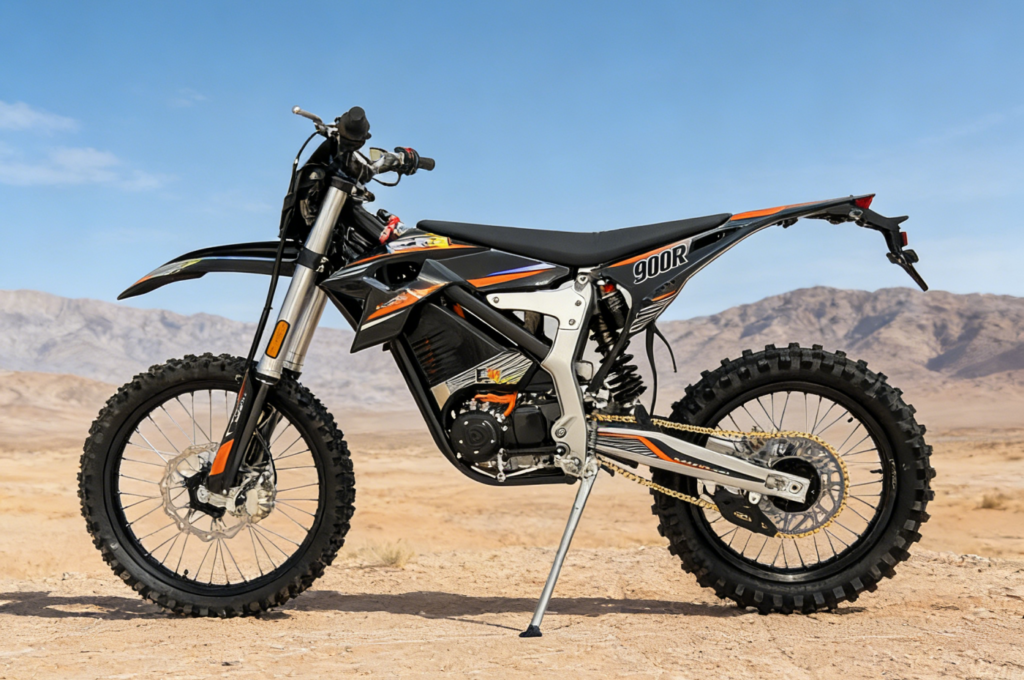

Powering Your Adventures Through Smart Battery Stewardship in the Electric Revolution
The world has always been shaped by the intersection of crisis and innovation. When geopolitical tremors disrupt the foundations of global energy—such as the oil supply upheavals that ripple through markets during conflicts like the US-Iran tensions—the world doesn’t simply retreat into darkness. Instead, humanity accelerates toward the light of alternatives, toward technologies that promise not just survival but transformation. Today, as we stand amid this historic pivot from fossil fuel dependency to electrified freedom, the Off Road Electric Motorbike has emerged not as a compromise forced by circumstance, but as a superior expression of everything motorcycling was meant to be.
This is the golden age of the Electric Motorbike. What began as environmental consciousness has evolved into pure riding passion. The silent torque, the instant acceleration, the elimination of maintenance rituals that once consumed our weekends—all of these advantages have riders across the globe embracing electrons over explosions. But with this electric revolution comes a new relationship with our machines, a new literacy we must develop to maximize the potential of our battery-powered steeds.
The battery is the heart of your E-Motorbike, the reservoir of adventure that determines how far you can roam, how hard you can ride, and how many years your machine will faithfully serve you. Treat it with wisdom, and it will reward you with thousands of miles of grin-inducing exploration. Neglect its needs, and you’ll face diminished range, premature replacement costs, and the frustration of a ride cut short.
This guide distills the collective wisdom of engineers, professional riders, and dedicated enthusiasts into ten actionable strategies that will extend your battery’s lifespan, optimize its performance, and ensure that every charge delivers maximum adventure. These aren’t abstract theories—they are battle-tested practices that will transform how you interact with your electric machine.
So charge your enthusiasm, and let’s dive into the art and science of battery longevity.
Pro Tip 1: Master the 20-80% Charging Rule
Here’s a counterintuitive truth that every Off Road Electric Motorbike owner needs to internalize: charging your battery to 100% every single time is actually shortening its life. Lithium-ion batteries—the power source for virtually every modern Electric Motorbike—experience their highest stress levels at extreme charge states, both fully charged and deeply discharged.
The optimal daily operating window for maximum longevity is between 20% and 80% charge. Within this range, the internal chemical reactions that gradually degrade battery capacity proceed at their slowest pace. Industry data from major EV manufacturers indicates that consistently limiting charge to 80-90% for daily use can extend total battery lifespan by an impressive 25-30% .
Implement this strategy practically: charge to full only before those epic long-distance rides where maximum range is essential. For your typical trail sessions, weekend adventures, and daily commutes, stop charging at 80%. Most modern E-Motorbike models allow you to set charge limits through their companion apps or display settings. If your particular machine lacks this feature, use a simple timer to calculate approximate charge times based on your charger’s output rate.
The bottom threshold matters equally. Discharging below 20% regularly forces deeper stress on battery cells. Set a mental alarm to head home when you hit 30%, giving yourself a comfortable buffer before reaching critical levels. Battery experts have converged on a charge level of 30-70% as the range where lithium-ion cells experience the least degradation .
Think of your battery like an athlete—performing at peak capacity occasionally is fine, but maintaining that peak constantly leads to burnout. The 20-80% rule is your battery’s training regimen for a long and healthy life.
Pro Tip 2: Become a Temperature Guardian
If there’s one factor that devastates battery health faster than any other, it’s temperature extremes. Your Off Road Electric Motorbike battery is essentially a carefully orchestrated chemical reaction in a metal box, and temperature is the conductor that determines whether that symphony plays beautifully or descends into chaos.
The data is sobering. Research demonstrates that batteries stored at 100% charge and exposed to 104°F (40°C) temperatures can suffer annual capacity losses of up to 35%. At 140°F (60°C), the degradation accelerates to 40% or more annually. Even at moderate 77°F (25°C), a fully charged battery loses capacity at roughly 20% per year .
The optimal operating temperature for lithium-ion batteries is between 10-20°C (50-68°F), with storage ideally at 15-20°C (59-68°F) . This knowledge should directly inform your habits:
Summer Strategy: Store your Electric Motorbike in the coolest part of your garage, basement, or dedicated storage space. If you must store in hot environments, consider partial insulation or climate control. Never leave your battery in direct sunlight or inside a hot vehicle where interior temperatures can exceed 140°F within minutes.
Winter Wisdom: Cold temperatures temporarily reduce available capacity but don’t cause permanent damage. The key is pre-warming. Bring your battery indoors 30-30 minutes before riding, or take the first mile easy to allow self-warming through use. Never charge a frozen battery—let it return to room temperature first .
Year-Round Discipline: After hard riding sessions, resist the urge to immediately plug in. Your battery generates significant heat during aggressive use, and charging while hot compounds thermal stress. Allow 20-30 minutes of cooling time before connecting your charger .
Advanced E-Motorbike systems like those from Can-Am feature industry-leading liquid-cooled technology that transfers heat between components to maintain optimal operating temperatures. This special coolant system improves cooling in hot conditions and helps the electric system reach ideal temperature when cold, with a 5-year lifespan for the antifreeze/coolant formulation . If your bike offers such thermal management, ensure it’s properly maintained according to manufacturer specifications.
Pro Tip 3: Perfect Your Storage Protocol
Long-term storage is where more batteries meet their premature demise than through all the hard riding miles combined. The chemistry of lithium-ion cells continues slowly even when your Off Road Electric Motorbike sits idle, and improper storage creates irreversible damage that manifests as reduced range and diminished performance when you return to riding.
The golden rule for storage: charge to 50-60%—not full, not empty—and disconnect from power. At this charge level, internal chemical reactions slow dramatically while maintaining sufficient voltage to keep the Battery Management System (BMS) active and healthy .
Follow this comprehensive storage protocol for any idle period exceeding two weeks:
- Charge to precisely 50-60% capacity
- Disconnect the main power switch or remove the battery if your design permits
- Store in a temperature-controlled space, ideally between 40-70°F
- Check charge level monthly and recharge to 55-60% if it has dropped below 40%
- Never allow stored batteries to sit below 20% for extended periods
Research published in the Journal of Power Sources found that batteries stored at 50% charge retained 96% of their original capacity after one full year. Batteries stored fully charged retained only 80%—a dramatic difference that translates directly to your riding range and battery replacement timeline .
For winter storage exceeding three months, consider removing the battery entirely and storing it indoors at stable room temperature. This prevents parasitic drain from BMS monitoring systems and ensures consistent thermal conditions. Some dedicated riders invest in small climate-controlled cabinets for their batteries—a worthwhile investment given that replacement costs often exceed $1,000 for quality Electric Motorbike battery packs.
Pro Tip 4: Choose Your Charger Wisely
In the electrified world, your charger is as critical to battery health as your riding technique is to trail performance. This is not a place to cut corners or chase false economies.
Always, without exception, use the manufacturer-approved charger that came with your Off Road Electric Motorbike or one specifically recommended by the manufacturer. Third-party or incompatible chargers might save $50 upfront, but they can deliver inconsistent voltage that confuses your BMS, potentially causing cell damage, creating safety hazards, and voiding your warranty .
Documented cases show capacity losses of up to 15% over just six months from cheap, poorly regulated chargers. The proper charger sets optimal charging patterns, communicates correctly with your battery’s management system, and ensures balanced charging across all cells in the pack .
Balance charging deserves special attention. Every 10-15 charge cycles, perform a full balance charge: deliberately drain to approximately 20%, then charge uninterrupted to 100%. This recalibration process ensures that individual cells within your battery pack maintain equal charge states. Your BMS uses this recalibration to report accurate capacity and prevent the overcharging or over-discharging of weaker cells that can cascade into pack failure .
Avoid trickle charging overnight. Once your battery reaches full charge, unplug it. Leaving batteries connected to chargers causes micro-cycles at high voltage states, gradually stressing cells through tiny charge-discharge oscillations. Use smart plugs with programmable timers, set phone reminders, or simply develop the discipline of checking and disconnecting when charging completes .
If your E-Motorbike supports fast charging, treat it as an emergency tool rather than routine practice. While convenient for extending range during long days, repeated fast charging generates excess heat that accelerates long-term degradation. Standard charging is gentler, cooler, and extends overall battery life significantly .
Pro Tip 5: Ride Smart, Extend Far
Your right hand holds more power over battery longevity than you might imagine. Aggressive throttle response and sustained high-power output generate heat and accelerate battery wear in ways that compound over time.
During controlled testing with identical batteries on different riders, conservative throttle users achieved 20% greater battery longevity over two seasons of comparable mileage . This doesn’t mean sacrificing fun—it means being strategic about how you deploy your Off Road Electric Motorbike’s impressive performance.
Gradual acceleration is your friend. Rather than snapping the throttle wide open from a standstill, ramp up power progressively. This reduces peak current draw, minimizes heat generation, and often feels more controlled and confident on technical terrain anyway.
Power mode selection makes a tangible difference. Most modern Electric Motorbike models offer multiple riding modes—Eco, Normal, Sport, and sometimes customizable options. For casual trail riding and exploration, lower power modes deliver perfectly adequate performance while significantly reducing energy consumption and thermal stress. Reserve maximum output for demanding sections where you genuinely need the extra thrust .
Cooling breaks during marathon sessions allow your battery to shed accumulated heat. A 5-minute pause every 45 minutes of hard riding can meaningfully reduce thermal degradation over a full day of adventure.
Regenerative braking is one of the electric rider’s secret weapons. When you ease off the accelerator while moving, your E-Motorbike can recover energy through passive regeneration, putting power back into the battery while providing controlled deceleration. Many systems allow adjustment between Off, MIN, and MAX settings—with MAX returning the most energy to your battery . Some advanced systems like Can-Am’s also offer Active Regen, where twisting the grip in the opposite direction creates even stronger deceleration and energy recovery . These small boosts accumulate over a ride, making your adventure more efficient and your battery happier.
Pro Tip 6: Strategic Route Planning
The way you plan your adventures directly impacts battery life and longevity. Elevation, speed, and terrain all influence how hard your battery works—and how much heat it generates in the process.
Elevation impacts battery life just like fuel consumption in gas engines . Climbing demands sustained high power output, generating heat and deep discharge cycles that stress cells. When possible, choose flatter routes for maximum efficiency. If hills are unavoidable, consider descending routes that allow regenerative braking to recover some of the energy invested in the climb.
Speed selection matters enormously. Sustained high speeds on highways or open fire roads drain batteries faster than varied terrain riding. Your Off Road Electric Motorbike performs better in conditions with repetitive stops and decelerations where regenerative braking can recover energy . For maximum range and reduced battery stress, prioritize secondary roads and technical trails over sustained high-speed running.
Weather awareness should inform your planning. Cold weather below 50°F (10°C) temporarily reduces available capacity and increases internal resistance, making your battery work harder for equivalent performance . In extreme cold, consider shorter routes or indoor storage immediately before riding. Hot weather above 85°F increases thermal stress during riding and charging—plan shade breaks and avoid charging immediately after hard use.
Modern E-Motorbike systems increasingly offer integrated route planning with charging station locations, range estimation based on terrain, and real-time adjustment of projected range based on your riding style . Learn these tools, trust their guidance, and plan conservatively to avoid deep discharges that accelerate battery aging.
Pro Tip 7: Maintain Mechanical Efficiency
Here’s a truth that surprises many riders: your battery’s lifespan is directly affected by mechanical factors that seem unrelated to electrical systems. The harder your Off Road Electric Motorbike must work to overcome mechanical inefficiency, the more current it draws, the more heat it generates, and the faster its cells degrade.
Tire pressure is the simplest and most impactful factor. Underinflated tires create rolling resistance that forces the motor to work harder than necessary, increasing current draw and heat generation. Weekly pressure checks against manufacturer specifications can improve efficiency by 5-10%—a meaningful difference in both range and long-term battery health .
Drivetrain cleanliness ensures that every watt of battery energy reaches the rear wheel effectively. Chain lubrication, sprocket wear monitoring, and bearing maintenance all contribute to mechanical efficiency that reduces electrical demand.
Brake drag—calipers that don’t fully release, warped rotors creating friction—steals energy and forces unnecessary battery expenditure. Regular brake service ensures that deceleration happens only when you intend it.
Suspension setup influences efficiency too. Overly stiff suspension reduces traction and forces the motor to compensate with power; overly soft suspension creates wallowing that wastes energy through unnecessary movement. Proper sag and damping settings optimize the transfer of power to the ground.
Think of these mechanical factors as friction in your adventure equation. Eliminate them, and your battery’s energy flows efficiently to the trail. Ignore them, and you’re asking your battery to overcome obstacles that have nothing to do with terrain.
Pro Tip 8: Implement Rigorous Monitoring
The most successful Electric Motorbike owners treat battery care as an ongoing practice of observation and adjustment, not a set-it-and-forget-it afterthought. Establish a monitoring routine that catches problems early and provides data for informed decision-making.
Monthly routine (10 minutes):
- Inspect battery terminals for corrosion, moisture, or physical damage. Clean with contact cleaner or isopropyl alcohol if needed, ensuring thorough drying before reconnection
- Check for battery swelling, case deformation, or unusual odors that indicate internal problems
- Verify that charge holds overnight—excessive self-discharge suggests BMS issues requiring professional attention
- Review any error codes through your bike’s diagnostic display or companion app
Quarterly deep maintenance (30 minutes):
- Perform a balance charge cycle (drain to 20%, charge uninterrupted to 100%)
- Check all electrical connections for tightness and corrosion
- Update firmware if manufacturer releases battery-related patches
- Test actual range against your established baseline to track degradation trends
Document these sessions in a simple log. Tracking capacity over time helps you catch problems early, provides warranty evidence if needed, and informs decisions about when to adjust riding habits or plan for eventual replacement.
Modern E-Motorbike systems increasingly offer sophisticated battery health monitoring through smartphone apps. Features like Bosch’s Range Assistant, Specialized’s Mission Control, and similar platforms provide real-time range projections, route planning alternatives, and battery health indicators that make monitoring almost effortless . Embrace these tools—they represent your battery’s voice, communicating needs and status that visual inspection cannot reveal.
Pro Tip 9: Avoid the Fatal Mistakes
Learning from others’ errors saves thousands of dollars and countless hours of frustration. These mistakes appear in the vast majority of premature battery failures:
“I’ll charge it tomorrow” syndrome: Leaving batteries depleted below 20% for days accelerates irreversible damage to cell chemistry. If you cannot charge immediately after a ride, at least bring the battery to 30-40% within 24 hours. Deep discharge is a battery’s silent killer .
Fast charging addiction: While convenient for extending range during long days, repeated fast charging generates excess heat that compounds thermal degradation. Reserve rapid charging for genuine emergencies; standard charging is gentler and extends life significantly .
Ignoring warning signs: Reduced range, longer charge times, error codes, or unusual heat during charging all signal developing problems. Address these immediately rather than riding until catastrophic failure. Early intervention often prevents complete pack replacement .
DIY battery repairs: Battery packs contain high-voltage systems with serious fire and electrocution risks. Unless you have specific training in high-voltage electrical systems, leave repairs to certified technicians. Online tutorials rarely cover the safety protocols that prevent disasters .
Improper transport: Securing your Off Road Electric Motorbike for transport with the battery installed can create vibration damage or accidental activation. Remove the battery for long trailer hauls when possible, or ensure it’s fully secured and powered down.
Pro Tip 10: Embrace the Electric Mindset
Our final tip transcends specific techniques to address the fundamental shift in thinking that electric ownership requires. The E-Motorbike is not a gasoline machine with a battery instead of a fuel tank—it is a different category of vehicle with its own rhythms, requirements, and rewards.
This mindset shift begins with understanding that your battery is a living system, not a passive container. It responds to care with longevity, to neglect with premature decline. The practices we’ve outlined—charge discipline, temperature management, storage protocol, mechanical maintenance—are not burdensome obligations but investments in uninterrupted adventure.
The electric mindset also embraces new possibilities. Regenerative braking transforms descents from energy waste into energy recovery. Silent operation allows you to hear terrain feedback and natural soundscapes that gasoline engines obliterate. Instant torque provides control precision that transforms technical riding. These advantages come with the responsibility of battery stewardship, and that stewardship becomes second nature with practice.
As global energy dynamics continue evolving—as geopolitical tensions remind us of petroleum’s vulnerabilities and environmental imperatives demand cleaner alternatives—the Electric Motorbike represents not just a practical choice but a passionate commitment to a sustainable riding future. Your battery is the vessel of that commitment, the reservoir of adventures yet to come.
Treat it with the respect it deserves, and it will carry you through thousands of miles of grin-inducing exploration—silent, powerful, and gloriously free.
The Charged Path Forward
We stand at an extraordinary moment in motorcycling history. The convergence of geopolitical necessity, environmental consciousness, and technological capability has created conditions where the Off Road Electric Motorbike isn’t merely viable—it’s superior. The battery that powers your adventures is both your greatest asset and your primary responsibility.
The ten pro tips we’ve explored aren’t abstract suggestions from a manual. They are the distilled wisdom of engineers who designed these systems, riders who have pushed them to their limits, and enthusiasts who have learned through trial and triumph how to maximize performance and longevity.
Implement the 20-80% charging rule as your daily discipline. Guard temperature like the precious variable it is. Store with scientific precision. Choose your charger as carefully as you’d choose a riding partner. Ride with strategic intelligence. Plan routes that work with your battery, not against it. Maintain mechanical systems that reduce electrical burden. Monitor relentlessly. Avoid the fatal mistakes that destroy premature packs. And embrace the electric mindset that transforms obligation into opportunity.
Your E-Motorbike battery is more than a component—it’s the heartbeat of your adventures, the silent partner in every climb, every berm, every sunset viewed from a mountain summit reached under electric power. Care for it wisely, and the adventures it enables are limited only by your imagination and your courage to explore.
The trails are calling. Your battery is charged. The future is electric.
Ride on.


