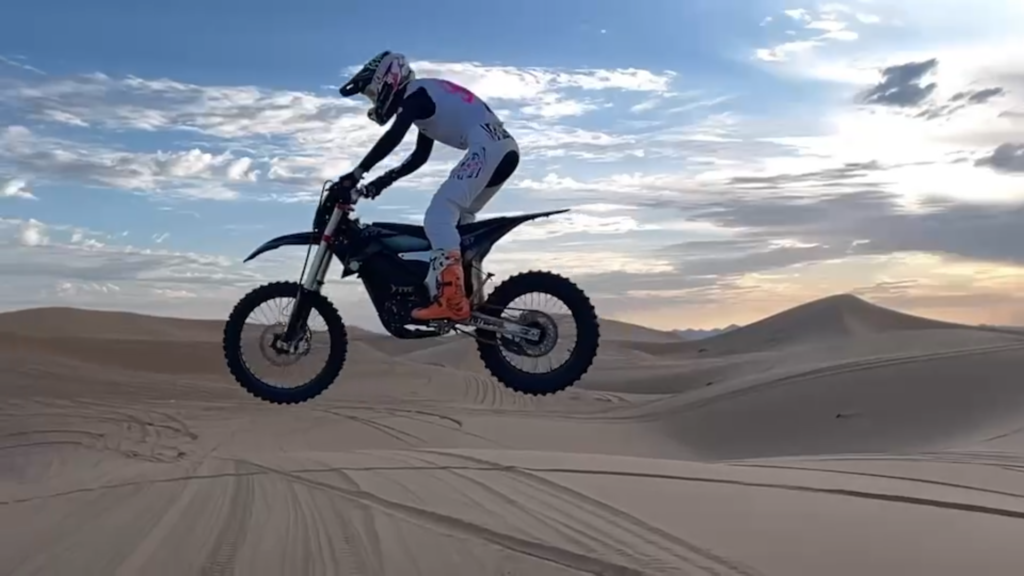

The rumble of a two-stroke, the smell of premix in the air, the frantic kick-start to life — it’s a sensory experience that has defined off-road riding for generations. But if you’ve been paying attention to the industry lately, you know a quiet revolution is underway. Electric dirt bikes are no longer novelty toys. They’re winning races, turning heads, and converting lifelong gas riders at a pace nobody predicted.
That doesn’t mean the switch is effortless. Electric dirt bikes deliver power differently, handle uniquely, and demand a new set of habits. Whether you’re a seasoned motocross veteran or a weekend trail rider, here are ten practical tips to make your transition from gas to electric as smooth as the power delivery itself.
1. Reset Your Brain Before You Twist the Throttle
The single biggest adjustment isn’t physical — it’s mental. On a gas bike, power builds gradually. You hear the engine rev, feel the clutch engage, and anticipate the surge. That entire sensory warning system disappears on an electric bike.
Electric motors deliver 100% of their torque at zero RPM. Twist the throttle and the bike goes — immediately. There’s no rev-building, no clutch engagement, no powerband to find. Professional riders who’ve tested both say the acceleration from a dead stop is unlike anything in gas motocross.
Start in the lowest power mode your bike offers. Most electric dirt bikes come with Eco, Normal, and Sport modes that cap power output. Spend your first few rides in Eco. Get comfortable with the instant response before you unlock the full punch.
2. Master Ultra-Fine Throttle Control
Because there’s no clutch to feather, your right wrist becomes your only lifeline to traction. The instant torque that makes electric bikes so thrilling is also a double-edged sword. If you grab a handful of throttle out of panic — a phenomenon riders call “whiskey throttle” — the bike will loop out from under you before you know what happened.
Treat the throttle like a precision dial, not an on/off switch. In slippery conditions like mud or loose gravel, rolling on gently prevents the rear tire from spinning out and breaking traction. Practice on a flat, open surface first. Keep your wrist neutral, apply power progressively, and close the throttle before you become tense or lose your line.
One more thing: don’t grip the handlebar like you’re hanging from it. A rigid upper body makes steering less precise and can cause accidental throttle movement over bumps.
3. Rewire Your Braking Logic
This one catches almost every gas rider off guard. On a traditional dirt bike, your left hand operates the clutch and your right foot controls the rear brake. On most electric dirt bikes, there’s no clutch — and many models relocate the rear brake to your left hand (a setup known as LHRB, or Left Hand Rear Brake).
This isn’t just a mechanical change; it’s a neurological one. Decades of muscle memory need to be rewritten. The upside? Having the rear brake on your left hand means you can modulate it while your right foot stays planted on the peg, which actually improves control in technical terrain.
Spend time in a safe area practicing emergency stops and low-speed maneuvers. Your brain will adapt faster than you think — usually within a few rides.
4. Lock Into the Attack Position
Riding an electric dirt bike passively while sitting down will lead to a crash. As soon as the trail gets rough, you need to adopt what riders call the “attack position.”
Stand up on the footpegs with the balls of your feet. Keep your elbows up and pointed outward. Squeeze the bike firmly with your knees — that’s where the gas tank would normally be on a traditional bike, but on an e-moto, it’s often the battery box. This stance lets your legs and core absorb the bumps, reducing arm pump and keeping the chassis balanced.
Electric dirt bikes are often lighter and more nimble than their gas counterparts. While that makes them highly flickable, it also means they can deflect off rocks or whoops at high speed. At speed, don’t try to steer purely with the handlebars. Shift your weight and press down on the inside footpeg to carve through corners while maintaining stability.
5. Plan Your Range Like a Pilot Plans Fuel
Published range figures are a reference, not a promise. Soft ground, steep climbs, cold weather, rider weight, tire pressure, and repeated hard acceleration can all dramatically increase energy consumption.
Real-world data backs this up. A bike that claims 50 miles of range might deliver 35 miles of spirited trail riding with a 200-pound rider. Another model claiming 45 miles realistically delivers around 30 miles under aggressive use.
For your first few rides, stay close to your starting point and use routes with easy exits. Begin with a fully charged battery, note the charge level at several points, and turn back with a generous reserve. Over time, you’ll develop an intuitive sense of how your bike behaves on your terrain. That personal experience is more valuable than any spec sheet.
6. Learn the Art of Battery Management
Charging habits matter more on an electric dirt bike than gas stations ever did on a gas bike. Most models take anywhere from 4 to 10 hours to fully charge, depending on the battery capacity and charger output.
A few best practices: avoid fully depleting the battery to extend its lifespan, recharge after each ride when possible, and store the bike and battery in a cool, dry place. Only use the charger designed for your specific battery system — cheap aftermarket chargers can damage cells.
If you’re planning long trail days, consider whether your bike supports swappable batteries. Battery swaps are already competitive with fuel stops in FIM Hard Enduro World Championship events, and in some cases, range may not even require a stop depending on the setup.
7. Embrace the Zero-Maintenance Lifestyle
This is the tip that converts the most skeptics. Electric dirt bikes eliminate oil changes, spark plug replacements, carburetor cleaning, air filter maintenance, and fuel system upkeep entirely.
Your maintenance routine shifts to a few simple tasks: check tire pressure before every ride, inspect and tighten bolts periodically (electric bikes vibrate less, but checks still matter), maintain the drive system if your bike uses a chain, and keep the battery terminals clean and dry.
One caveat: don’t skip periodic powertrain inspections just because there’s no engine. Skipping service on an electric bike is no different from skipping a piston replacement on a gas bike — eventually, something will fail.
8. Do the Math on Cost of Ownership
The sticker price of an electric dirt bike can be higher than a comparable gas model. Quality electric dirt bikes typically run between $3,800 and $6,000 for a high-performance model, while budget options start around $1,000–$1,500 for smaller displacement bikes.
But the math changes dramatically over time. Fuel and electricity costs over five years tell the story clearly: roughly $200 for an electric bike versus $1,500–$2,500 for a gas bike. Add in the elimination of oil, filters, and engine rebuilds, and the electric bike becomes cheaper to own within a few years.
Gas-powered dirt bikes typically need more maintenance, such as air filter cleanings and oil changes, so they cost more to operate long-term. If you keep your electric dirt bike in good condition and ride it regularly, it’ll be cheaper than a gas-powered bike in the long run.
9. Find Your Electric Riding Community
One of the unexpected joys of switching to electric is the community that comes with it. The Sur-Ron Light Bee X has become the best-selling electric dirt bike on the planet with a fanatical aftermarket community, and platforms like ElectricDirtRiders.com connect riders who share conversion tips, battery upgrades, and trail recommendations.
This matters because electric dirt bikes are still evolving rapidly. Firmware updates can change how your bike performs. Aftermarket controllers, throttle upgrades, and battery packs are constantly being developed. Being plugged into a community means you’ll learn about upgrades and fixes that could otherwise take months to discover on your own.
10. Adjust Your Riding Spots and Mindset
Electric dirt bikes open doors that gas bikes simply can’t. Near-silent operation means you can ride in noise-restricted OHV parks, on private property, and in areas where a two-stroke’s bark would draw unwanted attention.
That said, you need to check the rules of any trail or track before you ride it. Regulations vary widely by state and municipality. In most states, electric dirt bikes are allowed on smaller residential streets or off-road trails, but always verify local rules, as they can evolve rapidly.
The quieter ride also changes the experience itself. Without engine noise dominating your senses, you’ll hear your tires on the dirt, the wind through your helmet, and the world around you in a way that gas riders rarely experience. It’s a different kind of connection to the terrain — and most riders who make the switch say they’d never go back.
The Bottom Line
The transition from gas to electric isn’t about abandoning what you love about dirt bikes. It’s about discovering a new way to experience the same trails, the same adrenaline, and the same freedom — just with less noise, less maintenance, and a whole lot more torque.
Take your time. Respect the instant power. Learn the new habits. And when you’re ready to twist that throttle for the first time, you’ll understand why so many riders are making the switch.
The future of dirt biking isn’t loud. It’s fast, clean, and surprisingly quiet.


