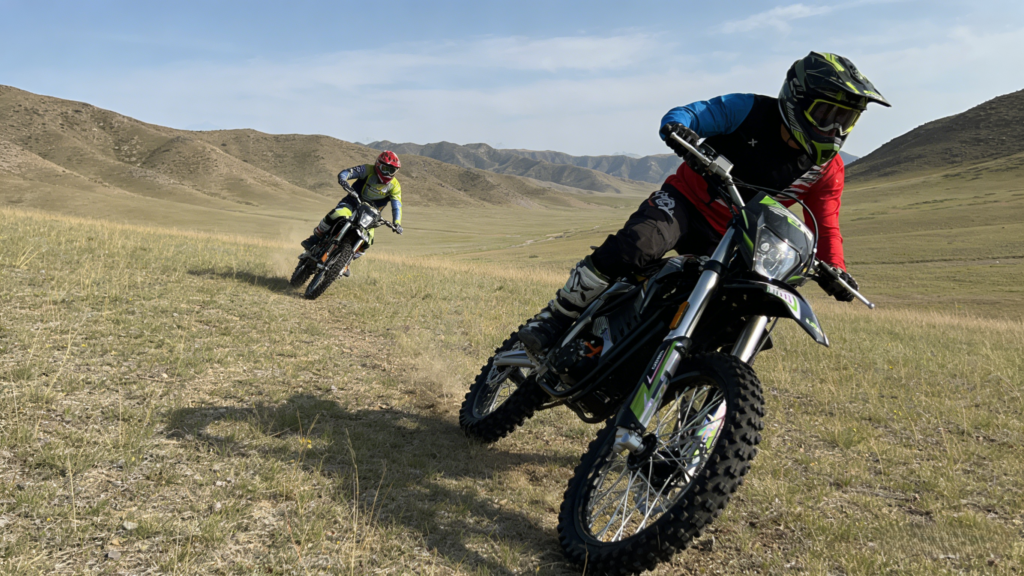

The year 2026 marks a watershed moment in the annals of motorcycling history. What began as a tentative experiment by niche manufacturers has blossomed into a full-blown revolution, fundamentally reshaping the landscape of off-road motorcycling. The Electric Enduro Motorcycle, once dismissed by purists as a novelty incapable of matching the raw character of internal combustion, has proven itself not merely as a viable alternative, but as the dominant force propelling the industry into a new epoch. As we survey the terrain from our vantage point in 2026, the transformation is nothing short of extraordinary.
The Seeds of Disruption (2019–2023)
To comprehend the magnitude of change, one must first revisit the humble origins of this movement. The late 2010s and early 2020s were characterised by scepticism. Traditionalists argued that the soul of enduro riding—characterised by the visceral two-stroke bark, the mechanical symphony of valves and pistons, and the ritualistic preparation of premix—could never be replicated by silent electric motors. Yet beneath this resistance, market forces were gathering momentum.
The global electric motorbikes market, valued at a modest USD 10.96 billion in 2025, was already demonstrating robust expansion, projected to reach USD 16.38 billion by 2034 with a compound annual growth rate of 5.0% . Within this broader category, the electric dirt bike segment was emerging as a particularly dynamic subsector, with market analysts projecting growth at a remarkable CAGR of 19.1% through the mid-2020s .
The catalysts were manifold. Environmental regulations were tightening across Europe and North America, with noise restrictions and emissions standards rendering many traditional riding areas inaccessible to conventional machinery. Simultaneously, battery technology was undergoing a renaissance. Lithium-ion cell costs plummeted by nearly 30% between 2020 and 2025, whilst energy density improved substantially . These advances directly addressed the twin anxieties that had hitherto constrained adoption: range limitations and the dread of “range anxiety” that plagued early adopters.
The Tipping Point: 2024–2025
The years 2024 and 2025 witnessed the decisive shift from experimental curiosity to mainstream acceptance. Several pivotal developments merit particular attention.
Stark Future, the Spanish manufacturer that had wagered its entire existence upon electric propulsion, achieved a watershed moment in June 2024, recording revenues of 10.4 million EUR in a single month—an unprecedented figure for an electric off-road specialist . This commercial validation silenced many doubters and demonstrated that consumers were prepared to invest premium sums in sophisticated electric machinery.
The technological achievements were equally impressive. The Stark Varg, in its evolved 2025 specification, demonstrated that electric enduro motorcycles could not merely approximate but surpass internal combustion performance. With instantaneous torque delivery, adjustable power mapping via smartphone applications, and run times sufficient for complete enduro events, the Varg rendered the performance gap between electric and petrol machinery largely academic .
Perhaps most significantly, established manufacturers finally committed their substantial resources to electrification. Honda’s CR Electric Proto, campaigned in the All Japan Motocross Championship with former professional Trey Canard, demonstrated that major OEMs were no longer treating electric technology as peripheral research. The prototype’s competitiveness against 450cc petrol machinery—securing holeshots and leading races—signalled that the technological maturity required for professional competition had arrived .
The emergence of lightweight and mid-weight categories further democratised access to electric off-road riding. Manufacturers such as Sur-Ron, Talaria, and Zero Motorcycles (with its anticipated XE model for 2026) created a spectrum of machines bridging the chasm between mountain bicycles and full-size motorcycles. These sub-140lb packages, exemplified by the E Ride Pro-SS and Talaria Sting, opened enduro-style riding to demographics previously excluded by physical stature, licensing restrictions, or apprehension regarding powerful machinery .
Market Maturation in 2026
By 2026, the electric enduro motorcycle market has achieved a sophistication that would have seemed fantastical merely half a decade prior. The global dirt bike market, encompassing all propulsion types, reached USD 9.17 billion in 2026, growing at 5.8% annually, with electric variants constituting the most rapidly expanding segment . Industry forecasts project this broader market will attain USD 11.97 billion by 2030, with electric innovation identified as a primary growth driver .
The segmentation of the electric enduro market has crystallised into distinct categories serving diverse rider profiles. Entry-level machines, equivalent to 50–100cc petrol bikes, emphasise accessibility and safety for younger or novice riders. Mid-range offerings (100–150cc equivalent) cater to recreational enthusiasts seeking balanced capability. The performance segment, exceeding 150cc equivalence, now delivers competitive specifications for serious competition and demanding terrain .
Battery and charging infrastructure has evolved to eliminate practical barriers to adoption. Contemporary machines offer capacities sufficient for hours of trail riding or complete motocross events on single charges. Charging durations have compressed to 1–2 hours for full replenishment, whilst swappable battery systems—exemplified by KTM’s Freeride platform—enable continuous operation through rapid pit stops . The proliferation of charging infrastructure at popular riding destinations has further assuaged concerns regarding range limitations .
The Competitive Landscape Transformed
The manufacturer ecosystem has undergone profound restructuring. The market, once fragmented between established ICE specialists and electric-native startups, has consolidated around hybrid portfolios and strategic partnerships.
Traditional powers such as Triumph Motorcycles, Yamaha, and BMW Motorrad have substantially increased R&D investment in electric platforms, leveraging their manufacturing scale and distribution networks to achieve competitive positioning . Meanwhile, electric-native companies including Stark Future, Sur-Ron, and Zero Motorcycles have matured from disruptive challengers to established players, their technological advantages in powertrain integration and battery management increasingly difficult for legacy manufacturers to replicate .
The distribution paradigm has shifted markedly. Direct-to-consumer online sales channels have gained substantial market share, reducing intermediary costs and enabling manufacturers to cultivate direct relationships with their clientele. This transition has been complemented by experiential retail concepts and event-based marketing, where prospective purchasers can evaluate machinery in authentic riding contexts .
Regional Dynamics and Global Expansion
The geographical distribution of electric enduro adoption reveals instructive patterns. North America and Europe maintain leadership positions, driven by high disposable incomes, supportive regulatory environments, and established off-road riding cultures . The Asia-Pacific region, however, represents the most dynamic growth frontier. China and India, buoyed by favourable government policies, expanding middle-class populations, and increasing environmental consciousness, are projected to contribute over 50% of incremental market growth .
This regional expansion has prompted strategic localisation by manufacturers. Production facilities in Asian markets reduce logistics costs and circumvent trade barriers, whilst culturally attuned marketing approaches address distinct consumer preferences. The European market, conversely, demonstrates mature demand characterised by premium positioning and sustainability-focused purchasing decisions .
Technological Frontiers and Future Trajectories
As we assess the technological frontier in 2026, several emerging trends presage further evolution. Advanced battery management systems (BMS) now optimise cell performance, thermal regulation, and longevity with sophistication approaching aerospace standards. Lightweight chassis materials, including advanced aluminium alloys and carbon fibre composites, continue to reduce overall mass whilst enhancing structural integrity .
Regenerative braking systems, initially dismissed as irrelevant to off-road applications, have proven unexpectedly beneficial in technical terrain, providing nuanced deceleration control and extending effective range. Rider aids derived from road-going electric motorcycles—traction control, wheelie management, and adaptive power delivery—are migrating to enduro specifications, democratising advanced riding techniques .
The convergence of electric enduro motorcycles with connected technologies represents a further frontier. Telemetry systems enabling post-ride analysis, predictive maintenance algorithms, and over-the-air performance updates are becoming standard features rather than premium options. These capabilities transform the relationship between rider and machine, enabling continuous optimisation based on empirical data rather than intuition alone.
Cultural Implications and Rider Community Evolution
The proliferation of electric enduro motorcycles has precipitated fascinating cultural shifts within the riding community. The traditional association between motorcycling and mechanical self-sufficiency—maintaining carburettors, diagnosing ignition faults, sourcing obscure gaskets—has diminished in relevance. Contemporary riders increasingly engage with their machinery through digital interfaces, software updates, and battery management rather than oily-handed mechanical intervention.
This transition has occasioned both lamentation and celebration. Purists mourn the loss of mechanical intimacy and the distinctive sensory experience of two-stroke operation. Conversely, advocates emphasise the democratising effect of reduced maintenance requirements, lower operational costs, and elimination of the technical barriers that excluded many from participation.
The environmental credentials of electric enduro motorcycles have facilitated access to previously restricted riding areas. Noise-sensitive regions, including proximity to residential developments and environmentally protected landscapes, have increasingly welcomed electric machinery where petrol-powered alternatives faced prohibition. This expansion of accessible terrain represents a significant, if underappreciated, benefit of electrification .
Challenges and Persistent Constraints
Notwithstanding remarkable progress, the electric enduro motorcycle market confronts persistent challenges. Initial acquisition costs remain elevated relative to equivalent petrol machinery, though total cost of ownership calculations increasingly favour electric alternatives when fuel, maintenance, and depreciation are comprehensively assessed .
Battery longevity and replacement costs constitute ongoing concerns. Whilst cell chemistry advances have substantially extended useful life, the prospect of eventual battery replacement—and associated expense—troubles prospective purchasers. Manufacturers have responded with extended warranties, lease arrangements, and modular battery architectures permitting incremental upgrades rather than complete replacement.
The perception of compromised performance, whilst increasingly anachronistic, persists amongst certain demographic segments. Range anxiety, despite technological amelioration, retains psychological currency, particularly amongst riders accustomed to the immediate refuelling capability of petrol machinery .
Conclusion: The Irreversible Transition
As we survey the electric enduro motorcycle landscape in 2026, the verdict is unambiguous: the transition from internal combustion to electric propulsion has achieved irreversible momentum. The technology has matured from compromise to superiority in critical performance dimensions. Market acceptance has evolved from enthusiast curiosity to mainstream adoption. Regulatory environments increasingly favour zero-emission alternatives, whilst charging infrastructure and battery technology continue their rapid advancement.
The Electric Enduro Motorcycle of 2026 represents not merely an environmental imperative or regulatory compliance exercise, but a genuinely superior riding instrument for the majority of applications. The instantaneous torque, adjustable power characteristics, reduced maintenance burden, and expanded terrain access collectively constitute a compelling value proposition that transcends ideological commitment to sustainability.
For the motorcycling industry, this transformation portends continued restructuring. Manufacturers incapable of mastering electric powertrain integration face existential peril. Those successfully navigating the transition discover opportunities for product differentiation, premium positioning, and expansion into previously inaccessible market segments.
As we look forward from our 2026 vantage point, the trajectory appears clear. The electric enduro motorcycle will constitute the dominant technology platform within the decade, with internal combustion increasingly relegated to specialist applications, heritage preservation, and developing markets where infrastructure constraints persist. The silent revolution has succeeded not through environmental moralising, but through the inexorable logic of superior technology—delivering performance, convenience, and capability that riders genuinely desire.
The evolution of the electric enduro motorcycle market from 2019 to 2026 stands as a testament to the capacity of innovation to overcome scepticism, transform industries, and redefine recreational possibilities. For those who have embraced this transformation, the future of off-road motorcycling has never appeared more exhilarating.
The author has covered motorcycling developments for fifteen years and maintains an active interest in sustainable mobility technologies.
If you liked the article, please follow us:
Related searches for electric dirt bike


