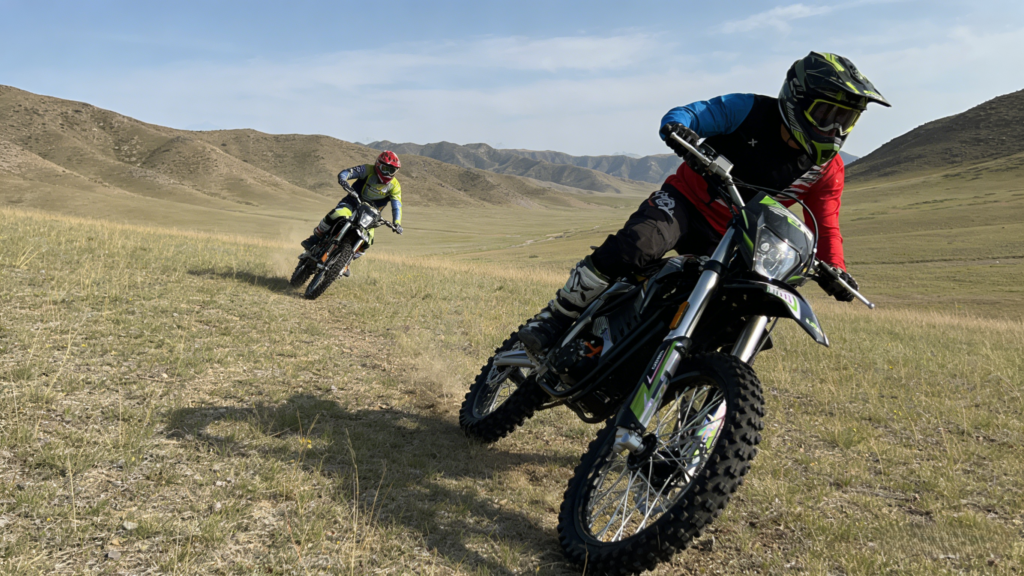

The Quiet Boom: How Electric Dirt Bikes Are Taking Over Britain
Walk through any British woodland on a Sunday morning, and you might notice something unexpected—the silence. Where once the two-stroke scream of motocross machines echoed through the valleys, an increasing number of riders are now gliding along trails with nothing more than a faint whir. The electric dirt bike revolution has arrived in the United Kingdom, and it’s accelerating faster than many anticipated.
The numbers tell a compelling story. The global dirt bike market, valued at USD 11.05 billion in 2024, is projected to reach USD 24.0 billion by 2035, expanding at a 7.3% CAGR . While this encompasses both gasoline and electric propulsion, the electric segment is capturing disproportionate attention. In the UK specifically, the 2022 EXGB Electric Off-Road Bike Race for kids at Devon’s Wheeldon Off-Road Facility signaled organized competitive embrace of electric technology . Adult riders have followed rapidly.
Several converging forces drive this British boom. Environmental consciousness has permeated outdoor recreation culture—riders increasingly view sustainability as integral to their identity rather than external imposition. Urban noise regulations have tightened, with many traditional riding areas facing closure due to decibel complaints. And perhaps most critically, the technology has matured to genuine competitiveness. Modern electric dirt bikes deliver performance that meets or exceeds gasoline equivalents in ways that early prototypes simply could not.
The UK market benefits from Europe’s broader regulatory momentum. Euro 5 standards actively discourage internal combustion engine dirt bike usage in municipalities and recreational areas, effectively mandating electric transition . British riders, connected to continental racing circuits and media, witness electric dominance at international enduro and motocross events, normalizing what once seemed radical.
What Exactly Is an Electric Dirt Bike?
An electric dirt bike is an off-road motorcycle powered by an electric motor and rechargeable battery pack rather than a conventional gasoline engine . These machines replace the mechanical complexity of pistons, valves, carburetors, and exhaust systems with elegant electrical architecture: battery cells storing energy, motors transforming that energy into mechanical propulsion, and sophisticated electronic controllers managing power delivery with millisecond precision.
The core components define both capability and character. Lithium-ion battery packs dominate due to high energy density, extended cycle life, and favorable weight characteristics . Capacity directly determines range, with larger packs enabling longer adventures between charges. The electric motor—typically brushless DC (BLDC) design—delivers the signature instant torque that distinguishes electric riding . Robust suspension systems, reinforced frames, and knobby tires maintain the rugged construction necessary for aggressive off-road use .
Modern electric dirt bikes function as integrated technology platforms. Regenerative braking systems convert kinetic energy into electrical energy during deceleration, extending battery life and enhancing efficiency . Smart connectivity enables riders to link bikes to mobile applications for diagnostics, performance tracking, and customization—from adjusting throttle response to monitoring battery health in real-time . Multiple riding modes allow power output optimization for different terrain conditions and rider skill levels .
The adult-oriented machines that dominate UK interest feature larger physical dimensions, higher power outputs (typically 10-20kW peak, with premium models exceeding this), and battery capacities sufficient for serious trail exploration. These are not toys or compromised alternatives—they are purpose-built performance machines engineered for demanding British terrain.
Why Britain Is Embracing Electric: The Driving Forces
Environmental Consciousness and Regulatory Pressure
British riders increasingly prioritize ecological responsibility. Electric dirt bikes produce zero tailpipe emissions, eliminating carbon monoxide, nitrogen oxides, hydrocarbons, and particulate matter that damage sensitive ecosystems . This matters profoundly in the UK, where trail riding frequently traverses Areas of Outstanding Natural Beauty, National Parks, and Sites of Special Scientific Interest. The environmental alignment transforms riders from perceived polluters into conservation partners.
Noise regulations represent equally powerful drivers. Traditional gas-powered dirt bikes generate 95+ dB of operational noise—often exceeding 110 dBA under load . Electric models operate below 55 dB, a 75% reduction that fundamentally changes land access dynamics . British landowners, local councils, and conservation bodies increasingly welcome electric machines where gasoline bans apply.
Performance Maturation
Early electric dirt bikes suffered from limited power, heavy batteries, and restricted range. Contemporary machines have shattered these limitations. The Stark Varg, a leading European electric enduro bike, delivers up to 80 horsepower and 692 lb-ft of torque at the rear wheel—power delivery customizable via ride modes for different terrains . Instant torque from 0 RPM provides unmatched control for technical climbs, rock sections, and burst acceleration from corners .
Battery technology improvements have addressed range anxiety. Advanced lithium-ion configurations now deliver extended riding sessions on single charges, with fast-charging capability reducing downtime . While gasoline still holds advantages for multi-hour endurance events, the gap narrows annually.
Economic Rationality
Total cost of ownership calculations increasingly favor electric. Maintenance costs drop dramatically—no oil changes, spark plugs, air filters, valve adjustments, or exhaust system servicing . Electric drivetrains contain up to 70% fewer moving parts than gasoline equivalents, translating to fewer failure points and lower long-term costs potentially saving $200-$300 annually on fluids and filters alone . Electricity costs substantially less than petrol per mile traveled.
Electric vs. Gas: The Off-Road Advantage Matrix
| Feature | Electric Dirt Bike | Gas-Powered Dirt Bike |
|---|---|---|
| Torque Delivery | Instant maximum from 0 RPM; linear and precise | Requires RPM build-up; power band management needed |
| Noise Level | <55 dB—near silent operation | ~95 dB; often exceeds 110 dBA under load |
| Maintenance (Annual) | ~$80 | ~$350 |
| Emissions | Zero direct emissions | ~105 g/km CO₂ |
| Rider Fatigue | Minimal vibration; no clutch/shifting | Vibration and mechanical engagement contribute to fatigue |
| Trail Access | Expanded—noise-sensitive areas welcome electric | Restricted—noise triggers closures |
| Environmental Impact | 65-85% lifecycle CO₂ reduction | Significant pollution; ecosystem degradation |
| Technology Integration | Native connectivity, over-the-air updates | Aftermarket add-ons; limited integration |
| Weight Distribution | Optimized battery placement; low center of gravity | Engine mass concentrated; traditional layout |
| Top Speed (Average) | 70-90 km/h | 70-110 km/h |
The performance comparison reveals nuanced trade-offs. Gasoline machines maintain advantages in absolute top speed and rapid refueling for endurance events. However, for typical British trail riding—technical singletrack, woodland exploration, hill climbs, and recreational motocross—electric characteristics prove superior. The instant torque, reduced fatigue, expanded access, and lower operating costs align precisely with how most UK riders actually use their machines.
Critical Considerations: Choosing Your Electric Dirt Bike
Motor Power and Configuration
Evaluate both nominal (continuous) and peak power ratings. For British terrain featuring technical climbs, muddy sections, and root-laced singletrack, robust peak torque proves essential. Mid-drive motors with integrated gearboxes offer superior weight distribution and torque multiplication compared to hub-mounted alternatives.
Battery Capacity and Real-World Range
Manufacturer claims require skeptical interpretation. British weather—cold temperatures reduce battery efficiency—and aggressive terrain consume capacity faster than optimistic laboratory conditions. For typical UK trail riding, prioritize models offering genuine 40+ mile range under mixed conditions, with fast-charging capability enabling midday top-ups when infrastructure permits.
Suspension Quality and Adjustability
British trails demand versatile suspension. Look for 200mm+ travel front and rear, with compression and rebound damping adjustment . Hydraulic systems from established suppliers (Öhlins, WP, Showa) ensure serviceability and parts availability.
Build Quality and Weather Resistance
UK riding occurs frequently in wet, muddy conditions. IP ratings for electrical components, sealed connectors, and corrosion-resistant finishes protect against moisture ingress. Examine frame construction, swingarm durability, and bearing specifications—areas where cost-cutting compromises longevity.
Weight and Ergonomics
Electric dirt bikes typically weigh 70-100 lbs (32-45 kg), heavier than some gasoline equivalents due to battery mass . Centralized, low-mounted battery packs preserve handling agility. Test ride for standing position comfort, seat-to-peg relationships, and handlebar reach during technical riding.
After-Sales Support and Parts Availability
Prioritize manufacturers or importers with established UK presence. Electrical components require specialized diagnostics; warranty support and parts logistics prove critical when issues arise. The complex BMS and high-voltage systems demand specialist maintenance capabilities .
Regulatory Compliance
Understand UK classification for your intended use. Electric dirt bikes may fall under motorcycle regulations depending on power output and maximum speed, affecting licensing, insurance, and road legality. For pure off-road use, ensure appropriate type approval and consider where private land permissions apply.
Proper Storage: Protecting Your Investment
British climate presents unique storage challenges. Moisture, temperature variation, and extended winter lay-up periods demand proactive care.
Battery Management: Store with battery charge between 40-60% for extended periods—never fully depleted or at maximum charge. Lithium-ion cells degrade faster at voltage extremes. If removable, store battery indoors at moderate temperatures; garage temperature cycling accelerates capacity loss.
Climate Control: Ideal storage maintains 10-25°C with low humidity. Unheated garages subject to freezing temperatures risk battery damage and reduce available capacity. Consider insulated storage solutions or seasonal battery removal to heated spaces.
Physical Protection: Elevate tires from cold concrete using stands or plywood to prevent flat-spotting and moisture wicking. Cover with breathable materials—never plastic sheeting that traps condensation. Apply corrosion inhibitor to metal surfaces, particularly fasteners and electrical connections.
Pre-Storage Preparation: Clean thoroughly, removing mud and organic matter that retains moisture. Lubricate chain if applicable, though many electric models use belt or direct drive eliminating this requirement. Verify brake function and suspension seal integrity.
Periodic Maintenance During Lay-Up: Monthly battery voltage checks prevent deep discharge. Brief controller activation maintains capacitor health. Rotate wheels to prevent bearing brinelling if storage exceeds several months.
The Road Ahead: UK Market Prospects
The British electric dirt bike future appears exceptionally promising, constrained primarily by infrastructure development pace rather than technology limitations or consumer demand.
Technology Trajectory
Battery energy density improvements projected through 2028 promise 20-25% range increases, further eroding gasoline’s endurance advantage . Solid-state battery emergence will enhance safety, reduce charging times, and extend cycle life. Motor efficiency gains will extract more performance from every watt-hour stored.
Market Expansion
The global electric motorcycle market is projected to reach $113 billion by 2030, with off-road electric bikes growing at 7.9% CAGR . The UK, as Europe’s second-largest motorcycle market with strong environmental consciousness, will capture disproportionate growth. Fleet applications—security patrols, estate management, agricultural support, and tourism operations—represent particularly promising segments where total cost of ownership calculations decisively favor electric .
Regulatory Evolution
British environmental regulations will inevitably tighten. The UK’s net-zero commitments imply eventual restrictions on internal combustion recreation vehicles. Electric dirt bike adoption now positions riders ahead of prospective regulatory curves, ensuring continued access as gasoline faces prospective obsolescence.
Infrastructure Development
Charging infrastructure expansion to rural areas, trailheads, and riding facilities remains critical. Solar-powered off-grid charging solutions could address remote location needs without grid dependency. Battery swapping networks, successful in Asian markets, may emerge for commercial fleet applications.
Cultural Transformation
Perhaps most significantly, British motorcycling culture itself is evolving. The sensory celebration of engine noise and exhaust character that defined previous generations gives way to appreciation for technical precision, environmental harmony, and expanded access. Younger riders, less attached to gasoline’s sensory signatures, embrace electric performance on its own considerable merits.
Conclusion: Unlocking Britain’s Trails
The electric dirt bike represents more than technological substitution for British riders—it fundamentally expands what’s possible. The silence that once seemed compromise becomes advantage, opening trails closed by noise complaints. The instant torque that initially surprised transforms into intuitive control across technical terrain. The environmental alignment that felt abstract becomes tangible access to protected landscapes.
Britain’s compact geography, diverse trail networks, and environmentally conscious riding culture create ideal conditions for electric off-road dominance. The technology has matured; the economics increasingly compel; the regulations progressively mandate. What remains is infrastructure maturation and cultural embrace—both advancing steadily.
For riders contemplating the transition, the question is no longer whether electric can satisfy off-road passion, but whether delaying adoption sacrifices trail access that peers already enjoy. The key to Britain’s riding future is silent, instant, and electrically charged. The trails await those who turn the throttle.

